Wednesday, May 18, 2016

Education Trailblazer Died 100 Years Ago

 Education Trailblazer Died 100 Years Ago

Guest Opinion by Ian Scott

Published in The Guardian, May 18, 2016

Mount Allison Wesleyan College, class of 1875.
The class of 1875, Mount Allison Wesleyan College, including Mount Allison's first female university graduate, Grace Annie Lockhart. Credit: Mount Allison University/2007.07, item 1190.
Mount Allison University
As student accomplishments are recognized at universities this month, it may be timely to reflect on the journey of Canadian women to gain an education. One hundred years ago on May 18, 1916 in Charlottetown, Grace Annie Lockhart died. As a young woman Grace stepped into the history books on May 25, 1875 at Mount Allison, when she became the first woman in the British Empire awarded a bachelor’s degree. A trail blazer from Saint John, NB, Lockhart was gradually followed by others and in the 20th century women were sometimes the first member in their own families to attend university including Edna Jean White, a Newfoundlander who studied during the summers and skipped two grades in school to achieve an Acadia degree in 1931 while still a teenager. She was a youthful exception to her class of 110 which was 62%  male and 38%  female. Both Lockhart and White shared their knowledge and skills with others and became teachers.

Edna Jean White, Acadia University
graduation portrait age 19  

 The author Lucy Maud Montgomery saved her teacher’s salary for an entire year to pay tuition for additional study at Dalhousie College in 1895; she like White and Lockhart, married ministers and through their various community roles encouraged girls and boys to consider university study.
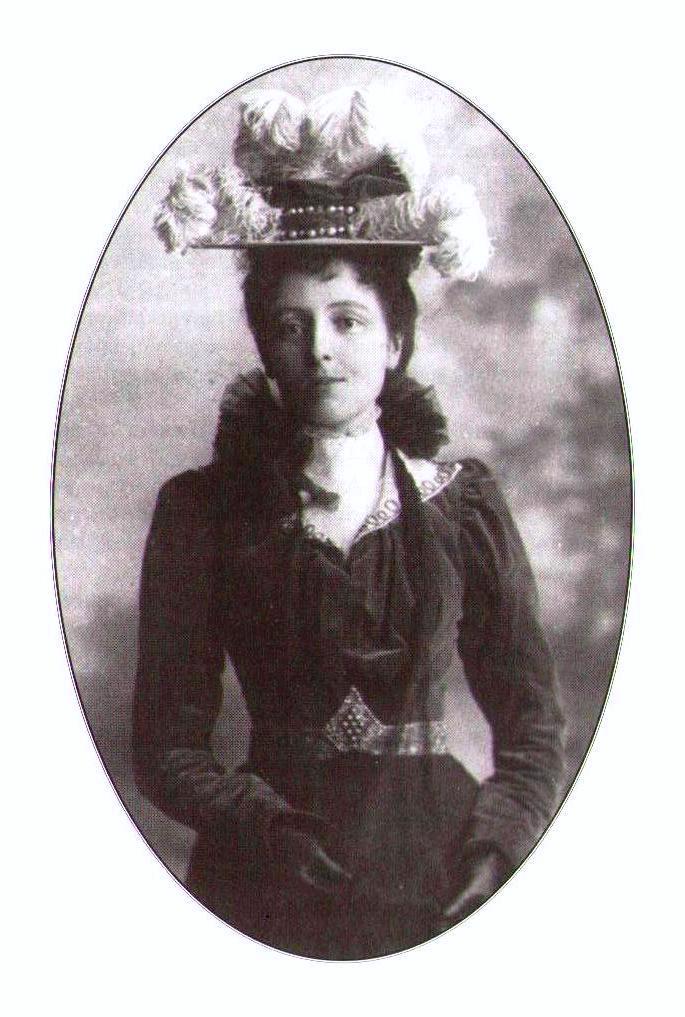
Lucy Maud Montgomery, Dec 31, 1896
Photo credit The Canadian Encyclopedia web version

The graduation lists of Canadian universities this month indicate the majority of graduates are women. Beginning with a single woman’s graduation in 1875, over the years the presence of women has continued to increase on Canadian campuses. In Canada in 1971, 32% of university graduates were female. By 1981 the figure was 46%  By 1991, females were 51% of the graduates and by 2001, the number reached 58%. By 2006, women accounted for 60% of recent university graduates. The total numbers of students (men and women) graduating rose 43% between 1992 and 2007, from 169,000 in 1992 to 242,000 in 2007, thus total number of both male and female students continued to grow even as the percentages gradually shifted.

Higher education for women was a gradual process lead by the example of early adopters. Grace Annie Lockhart married fellow Allisonian, the Rev. John Leard Dawson, a Methodist minister with deep Prince Edward Island roots. Their children and grandchildren followed in their footsteps at Mt. Allison, where there is a National Historic Sites memorial recognizing Lockhart as the first woman in the British Empire to be awarded a bachelor’s degree. She is buried next to her husband in Tryon People’s Cemetery. Her granddaughter Shirley (Dawson) Grogan captured the humble approach of her history-making grandmother, “I don’t think my grandmother ever made a big deal of it.”                                    

A big deal, it clearly was! Grace bravely opened a door for others to follow. As we congratulate all the men and women graduating this month, it is worth remembering those who dared to take first steps that allowed others to follow.

---------- update July 13, 2026

Full disclosure, in speaking with the editor days after this was published I mentioned that Edna Jean White mentioned in this item was my mother. The editor indicated that I should have included that in the story - so better late than never, I am mentioning that now.


Monday, December 28, 2015

Canadian Tire Stores in Charlottetown - Historical Notes

There is also an illustrated version of this article available on the Vintage Charlottetown site on Facebook.

In July 1, 1939, Lincoln Kennedy opened a sub-dealership for Canadian Tire (along with his Purina Feed operation) and eventually he was also selling Kaiser cars once Kaiser Motors was established in the US in 1945. The location was on Kent St. where the National Bank is located now.

By 1949 Allison MacRae and Milton C. Stewart opened a full-fledged franchise on Great George Street with the partners being the only full time employees. A 2,000 sq. ft. operation it promised "the very latest design for the utmost in pleasant shopping and modern service for the automobile driver."

It appears that the partners had both family and business connections as the Guardian reported the marriage of Milton's daughter Helen Stewart to his business partner Allison MacRae in Oct. 1947.

By 1953 Stewart and MacRae were advertising their Canadian Tire store as being located at 96 Queen St. On Saturday April 27, 1957 with large congratulatory ads from Charlottetown building contractors on their completely renovated store at this location.

In the Oct. 4, 1960 edition of the Guardian it was reported that the Monaghan Building (96 Queen Street) in which they were operating was sold to the Canadian Tire Corporation. A list of locations compiled in 2005 by Canadian Tire indicates that in 1961 the store moved to this 3,200 sq. ft. location, although it appear that a dealership had been operating there since the early 1950's and that this later date may indicate the transfer of ownership of the building.

On Jan 27, 1966 history was made when a new 12,000 sq. ft. location at Royalty Mall opened. It was the first in the country to be located in a mall and the largest Canadian Tire store in Atlantic Canada at the time according to the same 2005 write up by Canadian Tire.

In 1985 Canadian Tire moved to a new site at 202 Buchanan Drive location across the road from the Charlottetown Mall. In 1997 the store underwent a major expansion raising the size to 94,000 sq. ft. with more than 150 full and part time employees. In 2005 the owners published a statement indicating that their store was "the #1 Canadian Tire store in Atlantic Canada."

On Thursday October 29, 2014 The Guardian noted in an article that Canadian Tire will officially open its new Charlottetown store Thursday morning [Nov 6, 2014] on Spencer Drive.

The new store . . . features 64,000 square feet of retail space, approximately 50 per cent more retail space than the previous store. The auto centre will have 14 service bays and will now service cars seven days a week. Customers will also find an ‘in store pickup’ area for products purchased online, allowing customers to pay in advance and avoid checkout lines and shipping costs. To staff the company’s larger retail space they’ve added upwards of 35 new employees, bringing the total to 186 full- and part-time staff.

The street address is 20 Babineau Avenue, Charlottetown, PE C1A 0G1

An article on Cameron Beach, the 52 year old owner of the Charlottetown store was featured in The Guardian on November 7, 2015 outlining his career in retail across Canada and his commitment to Canadian Tire.


References:

  • The Guardian - online version http://islandnewspapers.ca/
  • Celebrating 66 Years, Advertisement by Canadian Tire, pg. 12  A City's Journey, The Guardian, Charlottetown PEI, April 2005
  • October 29, 2014, Canadian Tire rolls out new store in Charlottetown Thursday, The Guardian,  http://www.theguardian.pe.ca/Business/2014-10-29/article-3921079/Canadian-Tire-rolls-out-new-store-in-Charlottetown-Thursday/1
  • Day, Jim,  November 07, 2015, Canadian Tire store owner Cameron Beach driven by pressure to succeed, The Guardian, http://www.theguardian.pe.ca/Business/2015-11-07/article-4335612/Canadian-Tire-store-owner-Cameron-Beach-driven-by-pressure-to-succeed/1

Monday, June 22, 2015

A Verdure of Living Beauty: Arbor Day in Charlottetown

How did we come to have such wonderful elms in Charlottetown you might ask? Well the simple answer is - many hands make light work  - dig a bit deeper and a grand rural tradition across the Island emerges - using youthful vigour - known simply as “start ‘em young on chores.”

The year was 1860 and the town was more than rough around the edges. Our papers were asking, “is it not disgraceful that the Public Square (Queen Square) which should be an ornament to the city, should present . . .  the appearance of a farmer’s pig pen or a cow shed?” 

The call to action did start some planting that same year but without much protection; many trees were soon damaged.  It was not until the 24th of May, 1884 when the first Arbor Day was held and the newly formed Arbor Society tackled the job with 300 trees planted that first year. The list of participants on that Saturday was impressive as was the number of species they planted - 21 different varieties including bushes that would be valuable for birds. The Society defined which species were allowed and the size required and someone was in charge of each public square.

But quickly it was realized that this noble pursuit required more helpers and within two years

“It was deemed advisable to secure the hearty cooperation of the Education authorities and the children of the public schools.”

Saturday May 8th 1886 was declared a public holiday and 1,000 children paraded around the town to be addressed by the Lt Gov from the balcony of Province House. Arbor Day continued to be observed in the school system for decades. Programs included recitations, singing, speeches, band music, as well as tree planting. It was at one such event that the Island Hymn by Lucy Maud Montgomery was first performed in 1908.

1903 saw 200 trees planted under Mayor Paton’s direction, to line Elm Ave. - what is now known as University Ave. running from Allen St. to Euston St.

All this effort was producing results and a New Brunswick paper in 1885 noticed that the, “desert waste known as Queen Square . . . had been converted into a thing of beauty - a veritable oasis.”

Much credit for beautification should go to people like Arthur Newbery who showed personal dedication; being well placed within the public service also helped him advance the beautification effort. Others like Henry Smith, planted many trees personally, and as chairman of the Charlottetown School Board in 1921 he would recall the history of Arbor Day for the children assembled at Prince St. School:

 “Thirty-seven years ago there were very few trees in the public squares or streets of Charlottetown. Today we see them all around us as they are budding into leaf... These trees have transformed the city and clothed it in a verdure of living beauty. This is all the result of one day in each year by the Arbor Society, and the teachers and pupils of our City Schools.” He concluded his talk with describing our city as “one of the oldest and most beautiful cities in the Dominion of Canada.”

We have much to be thankful for - while elms remain an enduring legacy due to their impressive size and graceful shape we can also thank the beautification founders for their emphasis on many varieties so that our urban canopy continues to be rich in tree species.

In looking ahead they knew, and we inherit that wisdom - to continue to plant more trees, and to protect the ones we have.

- Ian Scott, Charlottetown, April 22, 2015

Read at a special evening of tribute and remembrance for the elm trees of Charlottetown, held at Trinity United Church.


Friday, October 24, 2014

Brewing History - Charlottetown, PEI

While craft breweries abound as a new trend, there was a time when many breweries existed in Charlottetown. The history of those early breweries is well told in a couple of articles by historians, Edward MacDonald, Carolyn MacQuaid, and Harry T. Holman. These excellent articles are linked below as well as a newspaper article from the 1980s and some notes I compiled on the early operations. I am indebted to Catherine Hennessey and the City of Charlottetown Heritage Website for their research.

  • John and Mary Cambridge established the Island's first brewery on the Wright's Mill site in East Royalty around 1808. The location is also known as Andrew’s Pond/Wright’s Creek with members of the Andrew family still living at this historic location. Various partners involved including George Wright of Wright’s Creek and the operation has been described as Bird Island Creek, the Island's first brewery.  H. T. Holman states that it probable didn’t even have a name but it may have been called Cambridge’s Brewery, Wright's Brewery or possibly Bird Island Creek Brewery.  George Westcomb, arrived from England to operate it as the Island's first brewer.
  • 1838 saw a brewery established by James H. Down at his roadhouse and inn on what is now the Research Station lands on University Ave. It was called Devonport Lodge.  Davenport Lodge opened on the Princetown Road [now University Avenue] as early as 1827. James H. Down announced the opening of his new house  where ever accommodation will be given to travelers by keeping always a good stock of liquors, with good bedding and private rooms . Things did not always run smoothly and its years in operation were rocky. Down also owned the Davenport Brewery and Distillery with 4 acres reserved for a hop garden. In 1849, the property became the home of prominent businessman, George DeBlois. He sold the property to Maurice Blake in 1887. It was acquired for the Experimental Farm in 1910. The building on University Avenue was demolished about 1971, leaving only the trees to tell where the property was located.
PARO Acc. 3466/HF 74.27.3.89
Devonport Cottage (Residence of G.W. DeBlois), ca. 1860's

  • Pethick Brewery opened in 1824 through a partnership with brewmaster Thomas Pethick in a renovated brick building located on the west side of Weymouth Street between Euston and Fitzroy Streets. Thomas Pethick started with George Wright but went on to operate his own brewery in 1830. Business continued for 40 years.
  • Coles' Brewery & Distillery, opened in 1835, and located on Kent Street where the current Central Christian Church is located. Operated by George Coles who eventually became premier of PEI.
  • Brighton Brewery established in 1848 by Robert Henri Frederick Smith - was operated by Charles Hyndman and Thomas Morris in 1868 and they sold it eventually to the Oland family of Halifax with English backers in 1895. Located near the corner of Goodwill Ave. and York Lane on what was known as Brewery Lane they carried Brighton Ale to the cricketing grounds by the bucket for thirsty cricketers in Victoria Park.
  • Kensington Brewery (Parkdale)
  • Job Bevan on Euston St. was a brewer who like George Simmonds (head of Prince initially and eventually operated on Simmonds Farm near North River Rd.) switched over to “cordials” and soft drinks. The Simmonds name lives on as sports fields and a rink located on the former farm bear the family name.
  • Spring Park Brewery  - owned by John Connolly and Co. in 1864 - it was also owned by W.C. Hopkirk in 1874. At one point an operation named Spring Park Steam Brewery and Distillery was advertised. 


Location of Spring Park Brewery in 1880 at top centre.
Located in the Connolly St. - Pond St. area west of University Ave. (then called Malpeque Road)

The most complete article on Island brewing history is by Dr Edward MacDonald and called, “Spirituous Liquors: Brewing and Distilling in 19 -Century Charlottetown"


A valuable source on the first brewery is Harry Holman’s article The Island’s First
Brewery, published in The Island Magazine, 25(Spring/Summer 1989).


Thursday, June 27, 2013

Photographs, Maps, Post Cards, Paintings & Other Visual Resources - PEI

I am often asked about images related to Prince Edward Island, so it may be an opportune time to bring together a list of the top sites for people wishing to explore the visual resources of historic interest. The best source of high quality images of PEI remains the Public Archives and Records Office (PARO) located on the top floor of the Coles Building - they can provide high quality digital images as well as  archival prints from their vast collection. Many of their images are now available through web projects which include:
  • A series of On-Line Exhibitions developed by the PARO include great historic images as well as great links to other visual resources.
  • Islandarchives.ca, a series of sites managed by the Robertson Library at UPEI including:
    • Island Imagined, which includes over 1,000 maps including an early map of the region circa 1574 attributed to Giacomo Gastaldi and features a digitized version of Meacham's Atlas from 1880.
    • Island Newspapers, includes full images of newspapers including historic ads from a wide range of years. 
    • Island Lives, includes over 200 community histories many which are not out of print and include digitial copies of all the images in those books. 
    • A series of items related to UPEI and the precursor institutions Prince of Wales College, and St. Dunstan's University are also rich with visual images. The longest lasting source of published historical articles and images to illustrate those articles remains The Island Magazine which has now been publishing since 1976 is now available in digital for through a cooperative project of the publisher, The PEI Museum & Heritage Foundation and UPEI. Almost all the original back issues of the magazine are also available for purchase through the museum.
  • A large collection of PEI postcards on the Flickr site of the PEI Museum & Heritage Foundation amounts to over 500 images.
     PEI Postcards
  • The PEI postcard collection of Phil Culhane has become a website with easy navigation and search functions providing a major collection of historic images. The site is called PEIpostcards.ca


  • The book Charlottetown: Then and Now, (2014) by Scott MacDonald uses a family photo collection begun by his father and is an excellent source of images and local history. It is sold locally in Charlottetown and through both Indigo and Amazon. Prior to publishing with Acorn Press an earlier version of the book was marketed through Blurb and called Charlottetown 1960 to 2010 through their on-demand printing. This 2010 edition has a full preview function but includes less pictures than the 2014 book. It is available online and print copies can still be ordered through the site.

  • Sailstrait a blog about the history of Charlottetown Harbour and small boat sailing on Northumberland Strait on Canada's East Coast has become an important resource for marine history as well as a rich resource of visual images, as is the companion blog Straitpost a history of the early postcards of Prince Edward Island - both published by the award winning historian Harry Holman.

User-provided content is driving the growth of five Facebook sites for historic images of PEI


Projects related to architectural history have added images to the Internet. There include:

  • Historic Places - Prince Edward Island which documents both historic structures and the architects who designed them. 
  • City of Charlottetown - Search A Property site [currently under redevelopment] which draws on the amazing dedication of Catherine Hennessey and others to research and document the built history of the capital city.
  • The City has also developed Charlottetown Stories a site rich with visual material but clustered around specific areas of the city or topics.  
  • The blog of C.W. Jeffery called PEI Heritage Buildings is also a solid source of information as well as visual resources.
  • A 72 page book published online in 2009 for the school system called Prince Edward Island Historic Places is an excellent resource.
Two online publications - published in pdf format are filled with early images of Government House and the Fanningbank Estate in Charlottetown: 

The Province of Nova Scotia has developed various on-Line exhibitions that include 30 historic Mi'kmag images from PEI.

Sunday, April 21, 2013

Atlantic Nocturne by J. Frank Willis (1908-1969)


Atlantic Nocturne

When the grey of the night creeps out of the east
And the salt of the sea smells cold,
And away in the west the evening has died
With a last brief gift of gold —
Then the rolling long-shore hills stretch out,
In an arabesque of blue
And the soft friendly glow of candlelight
In the cottages calls to you
To come and dream — to forget the day
And its cares — and the murm'ring tide
Will take you adventuring down the world
In your chair by the fireside,
Or bring to you with its mist of night,
The mood for quiet thought,
Or sing to you with its low soft voice
A tune that you'd almost forgot.

For there is a verse, or a melody,
Or a thought for everyone
In the Nocturne the old Atlantic sings
To the shore when day is done.

by J. Frank Willis (1908-1969)

The connections of this poem to Prince Edward Island are more personal but because it is not available on the Internet - thought this might be a spot to place a copy and tell the story behind it.

Frank Willis began his career as a Canadian broadcaster in Halifax, N.S. in 1925 and hosted an evening hour of poetry reading to organ music, initially called Harbour Lights and later Atlantic Nocturne.  In 1936, when the Moose River mine disaster occurred, trapping individuals in an abandoned mine 100 kilometres east of Halifax - Willis brought live broadcasting from an emergency to the CBC airwaves - his broadcasts of the rescue over 69 hours set a new place for radio in keeping Canadians connected to unfolding stories of significance. His career eventually took him to Toronto and he remained on the airwaves until 1963.

Atlantic Nocturne, was a signature piece of poetry J. Frank Willis wrote and read on the airwaves. It impressed another broadcaster, Bob Large of CFCY Charlottetown and he kept a printed copy of the poem in his home. At the funeral of Bob Large in 2009, longtime broadcaster Eric MacEwen read Atlantic Nocturne. Poetry is not often heard on radio - except on the weekly syndicated Eric MacEwen Show - thus it was a fitting tribute to another era when the roots of Canadian broadcasting were first being established.


Friday, November 16, 2012

Church History Charlottetown

A variety of PEI church histories are available online in various locations. This article attempts to identify the locations of those resources while giving a basic outline of the individual churches of Charlottetown. This started as a reference list which has been added to over several years. The list is not complete, as some groups gather in rented spaces and are more difficult to track. Most of the churches listed are Christian but other faith traditions active in Charlottetown are included as well.

The book of sketches of 300 PEI churches compiled by Sterling Stratton in the year 2000 and published in 2007 under the name The Complete Book of Island Churches At The Turn Of The Century The Year 2000 is now digitized and online.

Presbyterian
  • A history of Zion Presbyterian Church, Charlottetown, P.E.I - 1997 by Scott MacDonald tells of churches leading to Zion Presbyterian Church including Queen Square Church and the Free Church of Scotland. "The congregation of Zion Presbyterian Church in Charlottetown, Prince Edward Island, was formed in 1870 from the union of the Queen Square Presbyterian Church and the "Free" Presbyterian Church in Charlottetown. The Queen Square congregation was formed in 1847, however, a church building was not finished until 1860. The "Free" Presbyterian Church congregation was formed in 1854, and a church constructed in 1856. When the two congregations amalgamated in 1870, the name Zion Presbyterian Church was chosen. Property was purchased in 1906 for a new church building on the corner of Prince and Grafton Streets. The new church was opened and dedicated in 1913. In 1925, the congregation voted to remain within The Presbyterian Church in Canada." In 2022 an updated history was completed by Scott MacDonald which is available through the church office. A Guardian article in 2013 on the occasion of the 100th anniversary of the dedication of the new church provides an excellent outline of the history.

  • The Kirk of St. James, Presbyterian Church, in Charlottetown has updated its history booklet several times: the 1962 version, as well as the 1982 revision, and the 1992 version are all available online - as well as a document, The Women of The Kirk. In 2018 a newly compiled history booklet was written and is available for purchase through the church office. There is a brief illustrated history on the congregational website with historical pictures and key dates. A self-guided tour brochure and an illustrated version of the 1992 history is also available on this blog. The Kirk grew from a meeting held in 1825 which led to the first building which opened in 1831. This wooden structure was moved next to the site to allow construction of the stone structure that opened in 1878, and served as for an additional 17 years until the completion of a church hall in 1895. Fire struck the main church in 1898 but did not destroy the building. Repairs were made and a major renovation in 1931 reoriented the church interior 90 degrees. In 1965 a renovation and addition to the hall was completed that added a modern office and meeting rooms.
Free Church of Scotland
  • There is now a concise history of the Free Church of Scotland on PEI. The Free Church locally "dates from 1843 but with its roots in the Reformation, the Free Church of Scotland owes its distinctive title to its historical struggle to remain free from state interference in its internal affairs."  Most congregations with Free Church roots became part of church union efforts within the Presbyterian Church in Canada. Local congregations that did not became part of those unions maintained connections with Scottish affiliations. Birchwood Church congregation organized after WW II built a church at 1 Birchwood St. in 1954 that continues to operate in the same building.
Anglican
  • The Parish of Charlotte and the Church of St. Paul's in Charlottetown, Prince Edward Island, by Dr. Frank Jelks has not yet been digitized but the book tells of the oldest congregation in Charlottetown. As well a bound collection of the results of Dr. Jelks research is locally available through the Public Archives and Records Office. A brief history is available on the congregation's website. Three churches have served the congregation: 
    1. Opened in 1796 and completed in 1802, the first church stood in the western part of Queen Square where Memorial Hall of Confederation Centre now stands. It was demolished in 1836.
    2. The second church, designed by Isaac Smith was damaged during a storm while under construction but was completed and consecrated on August 21, 1836. 
    3. The current stone church, designed by William C. Harris was consecrated July 24, 1896.

Baptist 
  • A Legacy of Faith: The History of the Charlottetown Baptist Church since 1836, tells of First Baptist Church which was organized in August 1838 by Rev. George MacDonald and 9 charter members. Growth over the years led to several building programs. The roots of the congregations reach further back to 1836 when, "The small group began to hold weekly worship services at the home of local watchmaker John Jury. It was located at 161 Kent Street, about mid-block, on the north side of the street between Prince Street and what is now University Avenue; roughly at the site of the current parking garage... the second floor of John Jury's house, which they rented for a small fee, would seat about 100; but initially there was only a quarter of that number attending."
  •  In 1905, First Baptist hosted the first session of the newly formed Maritime United Baptist Convention. Four buildings have served the congregation over the years:
    1. The first structure was located at the corner of Euston and Prince St. it opened Aug. 24, 1845. The building was relocated to lower Great George St. across from the Bishop's Residence opening on May 1, 1853.
    2. An octagonal brick church was opened at the corner of Fitzroy and Prince St. (current location of the Salvation Army) opening on Dec. 14, 1879. It was destroyed by fire.
    3. The replacement church long known as the Brick Church opened in stages with the Sunday School Hall operational in Oct. 1889 and the church completed and opened on Jan. 11, 1891. The architect was Charles Benjamin Chappell.
    4.  The present church facility located across the corner from the prior two at 235 Prince Street was dedicated on May 17, 1959. The architect was Keith Pickard.
  • In 1978 Grace Baptist Church occupied their new building at Kirkdale Road in West Royalty.
  • "Community Baptist Church emerged from a small group of eight believers who met in a home to formalize a Bible Study and Prayer Fellowship in November of 1992. This group quickly grew and on August 29, 1993 they constituted as a church and affiliated with the Canadian National Baptist Convention. In October of 1995, Community Baptist Church started meeting in their newly constructed facilities at 162 Sherwood Road." Worship services includes Chinese worship. mychurchfamily.ca
  •  Cornerstone Baptist Church traces its beginnings to Charlottetown.  The congregations states that, "Cornerstone is one church in multiple locations, with services happening in Cornwall, Stratford, and Montague on Sunday mornings." Locations in the Charlottetown area are located at 9 Cornerstone Dr., Cornwall and at 295 Shakespeare Dr., Stratford. cornerstonebaptist.ca
  • Good News Baptist Church meets at Hillsborough Community Centre (199 Patterson Dr.) Their website history indicates that they date to 1977 when Gerald and Norma Baker moved to PEI, with a mission goal of seeing the establishment of an Independent Baptist Church in the Charlottetown area and that the church organized itself on June 4, 1978 meeting at the Glen Stewart School in Stratford, PEI. ​The following September the newly organized church purchased property on the Brackley Pt. Road. In April, 1980 the church accepted the offer from the Central Bedeque Fundamental Baptist Church that their former building be moved to the new property in Charlottetown. The first Sunday service in the newly reconstructed building was held in October 1980. In May of 2000, Good News Baptist Church graduated from mission status to full autonomy. ​In January 2016 the church moved to 199 Patterson Drive in the Hillsborough Park Community Centre to grow the word of God in the Hillsborough Park area.
  •  Beacon Baptist Church has a church building at 231 Brackley Point Rd., across from the  Charlottetown Airport. A Facebook post on November 25, 2018 indicated they were, "Looking forward to a great day in Church. We are celebrating our sixth anniversary as a Church today." 


Roman Catholic

  • A Century Plus Forty, by Fr. Art O'Shea (2009) is an historical review of the Diocese of Charlottetown, 1829-1969. It looks at diocesan and other events during the terms of the first nine bishops. It is available in local bookstores. Art O'Shea has written a series of books on Catholic history on PEI and a brief historical outline of the diocese. Things That Are Above Vol 1: The History of St. Dunstan's Cathedral Basilica, by Blair Bernard tells with pictures of the various buildings over time (four) that have stood on Great George St.; St. Dunstan’s Basilica structure is the fourth Roman Catholic Church to occupy this site since 1816. This one built of Miramichi freestone, was restored after a fire in 1916. 
  • In 1964 Holy Redeemer Roman Catholic parish erected a modern building at 3 Pond St. that replaced a smaller church on Upper Queen St. where the playground and parking lot of St. Jean School now stands.
Eastern Orthodox

Christian Reformed
  • Heartz Hall in East Royalty was the first meeting place, for a congregation that is now known as Charlottetown Christian Reformed Church and now located at 153 Mt. Edward Road. The current property was purchased in the mid 1960's and the church building was dedicated on February 6, 1966. The building was expanded twice, once in the early 1980's and once in 1994.  A brief history is available. 
Christian Brethren, Open Brethren & Non-affiliated
  • Charlottetown Gospel Hall is affiliated with 4 other Gospel Halls across PEI and part of an international assembly with roots in the Open Brethren movement. They are located at 143 Upper Prince St. 
  • "Faith Bible Church is a multicultural, non-denominational community church located in Charlottetown, . . . having no affiliation with any denominational body." The congregation built their church in 1980 and it is located at 392 St. Peter's Rd.
  • The Charlottetown Bible Chapel has roots in the Christian Brethren assembly which first met in the Sons of England Hall in 1954 and established their chapel at the corner of Cumberland and Longworth Ave. in 1955 with their first meeting during January 1956. In 1975 they moved to the current Bible Chapel which is located at 35 Linconwood Dr.

Churches of Christ
  • The Church of Christ congregation was established as  Central Christian Church at 217 Kent St. in 1900. The church was incorporated by the PEI Legislature on September 22, 1900. A new addition constructed in 2007 connected the original building along with a second building owned by the church creating a modern auditorium and entrance space which was dedicated on September 23, 2007. There is a brief history of the original building. Their website indicates they are not a denomination but they do recognize their roots in the Restoration Movement and are listed as being among the individual churches that use the terms Christian Churches/ Churches of Christ/Disciples of Christ in Canada.
Mormon (LDS)
  •  Mormon history (The Church of Jesus Christ of Latter-day Saints) indicates, "the Summerside Branch was the first branch created on the island although the Charlottetown Branch is the largest of the three with 250 members. About 150 members live in Summerside and 90 in Montague." The Charlottetown church was built in 1984 and is located at 10 Northridge Pkwy.
     Salvation Army
  • The Salvation Army has had a long history on PEI since Sept. 26, 1894 when the founder of the Salvation Army, William Booth visited the Island and stood at the pulpit of Trinity United Church, which at that time was a Methodist Church, in Charlottetown and preached a message of service to others. In 1966, the Salvation Army established a new Citadel, Barracks and Welfare Bureau on the SE corner of Prince and Fitzroy St. on a site that had previously housed 1st. Baptist. The prior Citadel had been locate on Great George St. in the area of the Atlantic Technology Centre. A newspaper article describes highlights of their history on PEI.
United Church
  • One hundred and fifty-one years ago Thomas Alley and Mark Butcher built the First Methodist Church on the corner of Prince and Sydney Streets. It was a great preaching hall brightly illuminated with nineteen tall windows. According to the Methodist liturgy of the day there was no question of installing stained glass windows nor providing an instrument such as an organ to accompany the Liturgy of the Word. As the Nineteenth Century drew to a close stained glass windows became acceptable and an organ was installed. Thus came into being the beautiful church interior the congregation enjoys to this day. (Excerpt from the Foreword by Reg Porter.) 
  • "The Wesleyans, or Methodists, had established a presence on Prince Edward Island in the late 1700s. They met in private homes until 1813, when they built their first chapel on the North side of Richmond Street, between Queen and Pownal Streets. They ceased meeting in this chapel in approximately 1835, when they built a new chapel on the corner of Prince and Richmond Streets. Their first service in the new chapel was held on the 9 July 1835 with the resident minister, J.P. Heatherington, leading the service. The building was approximately 42 by 55 feet long however, because of a rapidly increasing membership, the chapel was enlarged twice in 1840 and 1847. Due to various revivals over the next decades, the congregation continued to grow in size and it soon became apparent that a new church was required. In 1863-1864, the congregation built the current Trinity United Church along the south side of the wooden chapel. It was a much larger, brick building that would seat 1200. Thomas Alley and Mark Butcher, both architects and members of the congregation, were chosen to draw up the plans."
  • Spring Park United Church grew out of historic Trinity United Church. Beginning as a church school housed in a bungalow on Queen St. in 1959, shortly afterwards a congregation was formed and housed in a portable church on a lot adjacent to the current property (corner Kirkwood and Trafalgar) while still part of the Trinity pastoral charge.  On June 30, 1964 Spring Park United became a separate pastoral charge with Rev. C. C. Lewis as minister. The congregation undertook construction of the circular building with a sod turning on Sept. 7, 1964. The new sanctuary was dedicated on June 7, 1965.
  • Park Royal United Church was established in 1958 as a suburban church to serve the communities of Parkdale, Sherwood (then Central Royalty), East Royalty, and the present Stratford area. The name is derived from the community names Parkdale and Royalty, and is located at 11 Christie Drive, a street that was named after Rev. Howard Christie who was the interim moderator (supervising minister) while it was being established.  Land for the new church facility was donated by G. Stewart MacKay. Construction began on August 20, 1957 and the church opened following the laying of the cornerstone on June 22, 1958.  A new manse was constructed and dedicated on March 5, 1960. A history of the congregation is available on line.
  • Benjamin Chappell who arrived in New London, PEI to work at the Quaker colony established there, eventually moved to Charlottetown and continued as an active Methodist lay person. Seen as a father of Methodism on PEI a brief bio gives an introduction to him as well as the longer entry by J. M. Bumstead in the Dictionary of Canadian Biography.
Unitarian 
The Religious Society of Friends (Quakers)
  • Quakers (The Religious Society of Friends) also meet in the Chaplaincy Centre of the University of Prince Edward Island on Sunday afternoons.  They maintain both a website and a Facebook page.
 Pentecostal
  • The Charlottetown Pentecostal community established Calvary Temple on Prince Street in 1960 and in outgrowing that building established a new larger facility in 1980 at the corner of the Trans-Canada Highway and Malpeque Rd. with the same name - Calvary Temple. Calvary Temple Charlottetown Incorporated is affiliated with Pentecostal Assemblies of Canada.
Other Christian denominations
  • The Sherwood Church of the Nazarene is in "the Wesleyan-Holiness tradition, with the denomination tracing its roots to an anniversary date of 1908." Sherwood Church of the Nazarene is located at 40 Woodlawn Dr. An article on July 15, 2017 in The Guardian (PEI) indicates that the fist Nazarene church on PEI was founded on July 23, 1917 and was originally known at the Pentecostal Church of the Nazarene.  The first church was in Elmsdale meeting at Elmsdale Hall and in homes. In Nov. 1922, the Salvation Army transferred their hall to the new congregation which continued to use it until 1946, when a new building replaced it. In 1995 the current building was opened in Elmsdale.
  • Charlottetown Vineyard which is part of  Vineyard Canada holds Sunday services at the Farm Centre, University Ave. Charlottetown. A history of the Vineyard Movement tells how the denomination began in Hollywood, California in 1975 and now operates 1,500 Vineyard churches worldwide.
  • Harvest House Ministries operates at 243 University Ave, Charlottetown, and indicate that, "Harvest House PEI is home to the Island's first residential long term Addictions Recovery Center (A.R.C). The ARC opened it's doors in December 2013 for men ages 18 and up, who have been struggling with addictions and unhealthy lifestyles and are decidedly ready to be free and move forward in live in a positive and healthy way."
  • Hope of the Nations, operates also at 243 University Ave, Charlottetown, and indicates that it is a multinational fellowship exploring Christianity with Chinese translation offered. 
  • Sunrise is a member of The Wesleyan Church, and describes itself as a protestant evangelical denomination which meets at the Benevolent Irish Society Hall at 582 North River Road on Sundays at 10:30 a.m. While Wesleyan Methodist churches in Canada became part of church union that created the United Church in Canada in 1925, this denomination (with a similar name and roots) is affiliated with the Wesleyan Church which its world headquarters in Fishers, Indiana. 
  • Greater Life Church meets at Murphy’s Community Centre (200 Richmond St., Charlottetown): Worship, Sundays at 11 a.m. Pastor Donald Hood, 902-628-8776. greaterlifechurch.ca
  • Also meeting at Murphy's Centre is The Living Word Assembly which is part of the Redeemed Christian Church of God. The website indicates that the denominations is, "a large, international and diversified ministry with millions of members worldwide and with more than 5000 branches in at least 150 countries of the world. RCCG as the ministry is fondly called was established in 1952 and the General Overseer is Pastor Enoch Adeboye." 
Several other denominations are located in Charlottetown including:
  • Seventh-day Adventist Church is located at 70 Royalty Junction Rd., Winsloe. www.peisda.org
  • Kingdom Hall of Jehovah’s Witnesses, 55 Pope Ave. Charlottetown.
  • Sherwood Apostolic Pentecostal, 195 Kensington Rd. Charlottetown.
  • Church of God House of Prayer, 56 Lilac Ave. Charlottetown.
  • Deeper Christian Life Ministry was located at 7 St Peters Road, 2nd Floor, in Charlottetown.


Bahá’í
  • The Origins of the Bahá’í Community of Canada, 1898-1948tells briefly of the origins of the  Bahá’í Community on PEI, which began in 1942. Fires in Many Hearts, by Doris McKay and Paul Vreeland, published by Nine Pines Publishing in 1993 tells in more detail of the early years for  the Bahá’í community of Charlottetown. Travelling teachers were the first Bahá’í members to visit until Doris McKay's extended visit to PEI in May and June 1942. She settled on the Island with the formation of a spiritual assembly by 1944. The Bahá’í Faith Charlottetown Centre is located at 20 Lapthorne Ave. 
Muslim
  • Two mosques are located in Charlottetown the first one was established in 2004 in an privately owned building at 125 Queen St. and is know as Charlottetown Mosque.
Buddhist 
  • A Buddhist place of worship and learning is located within the restaurant operating as Splendid Essence. "The bright and delightful space on the second floor offers fascinating classes, lectures and exhibitions to enrich your life. The third floor is an elegant Buddhist praying hall."    The  Great Enlightenment Buddhist Institute Society (GEBIS) indicates that it is offering educational opportunities at Splendid Essence - 186 Prince Street,Charlottetown. In November 2016 media reports indicated that a new home had been secured for classes and meditation at 133 Queen Street. The Charlottetown Centre has a Facebook page   
  • The Buddhist Alliance of Prince Edward Island, a Theravada Buddhist community, was founded by a group of Sri Lankan Islanders in 2015. "The main purpose of the BAPEI is to facilitate Buddhist cultural community activities for moral development by accommodating special Buddhist religious activities, festivals, and ceremonies enabling all lay people who wish to attend and participate. The PEI Buddhist Alliance was incorporated on September 10, 2015 in Charlottetown." The Buddhist Alliance has a Facebook page
Jewish
  • A small but active Jewish community exists in Charlottetown although no place of public worship exists other than private homes at this time.  The community organized itself formally in 1993, with Dr. Joseph Naylor being elected first president.
  • Ahuva Mishpochah (Beloved Family) Messianic Congregation started in September 2008. It is affiliated with CTOMC (Coalition of Torah Observant Messianic Congregations). It meets at 231 Brackley Point Rd., Charlottetown (Beacon Baptist Church): Friday at 6:30 p.m. for fellowship followed by service at 7:30 p.m. Jan McLean, 902-213-8746; ahuva.org
  • An article in The Guardian on April 1, 2021 called Passover in a Pandemic indicated some quick facts about P.E.I.’s Jewish community:
  • • The first Jewish person on record in P.E.I. was Joseph Levi. He was a tailor from England and appears in the 1848 and 1855 colonial censuses.
  • • Four Jewish doctors began practising on the Island during the Second World War when many Island doctors enlisted.
  • • The celebration of Passover on P.E.I. was documented as early as 1908 in the Patriot newspaper.
  • • Today’s Island Jewish community is made up of people from across Canada and around the world. Most were not born on P.E.I., though there have been more births in the last year.
Hindu
  • The Indo Canadian Association of PEI while more of a cultural organization than a religious one is the sponsor of an annual Diwali "festival of lights" banquet in celebration of the ancient Hindu festival. The organization maintains a Yahoo Group
  • In February 2024 the following announcement was made, "With the divine blessings of the Lord, the Hindu Society of PEI joyfully unveils the inaugural opening of the island's first Hindu Temple on March 8th. The Temple will ceremoniously commence with the sacred Pooja of Lord Shiva and Maa Parvati on the auspicious occasion of Mahashivaratri. We warmly invite you to join us on this auspicious day."
  • The temple location of 569 Capital Drive, Cornwall, PEI was provided in the Facebook posting.
Sikh
  • An article published by CBC in April 17, 2022 indicates that "P.E.I.'s first Sikh temple opens doors in Stratford", which was also reported the following day by The Guardian. The CBC article indicated:
  • The Sikh community in P.E.I. has grown exponentially in the last decade, with Singh estimating that there could be around 1,500 Sikh living in P.E.I. at the moment, including students and workers.
  • Savneet Singh said he expects about 30 to 45 people to come to the gurdwara regularly, with many more attending for special events such as the annual holiday of Vaisakhi.
  • "It's not only for the Sikh religion, but for everyone in the community," he said. "Everyone is welcome here. The main motive of Sikh religion is to serve ... humanity."
  • The website of the PEI temple.
-----------------------------------------------
This listing has been updated over the years and draws from a listing posted by The Guardian.


Breaking Barriers in Education

Breaking barriers in education Guest opinion: Ian Scott Published by T he Guardian, Charlottetown -- online May 15, 2026 in print May 16, 20...